We’ve all heard the argument: AI subscriptions are massively subsidized, and someone will be left without a chair when the music stops. The root of it is that a heavy user can get “thousands in value” from a subscription when the same token usage is priced at API rates. New data centers cost billions of dollars, AI is expensive, so the subscriptions must eventually fail.
I understand the line of thinking. I was in this camp when I wrote The Claude Code Productivity Paradox. The problem is that the argument compares subscription pricing with API pricing, then treats the difference as the provider’s loss. API list prices aren’t the provider’s marginal inference cost.
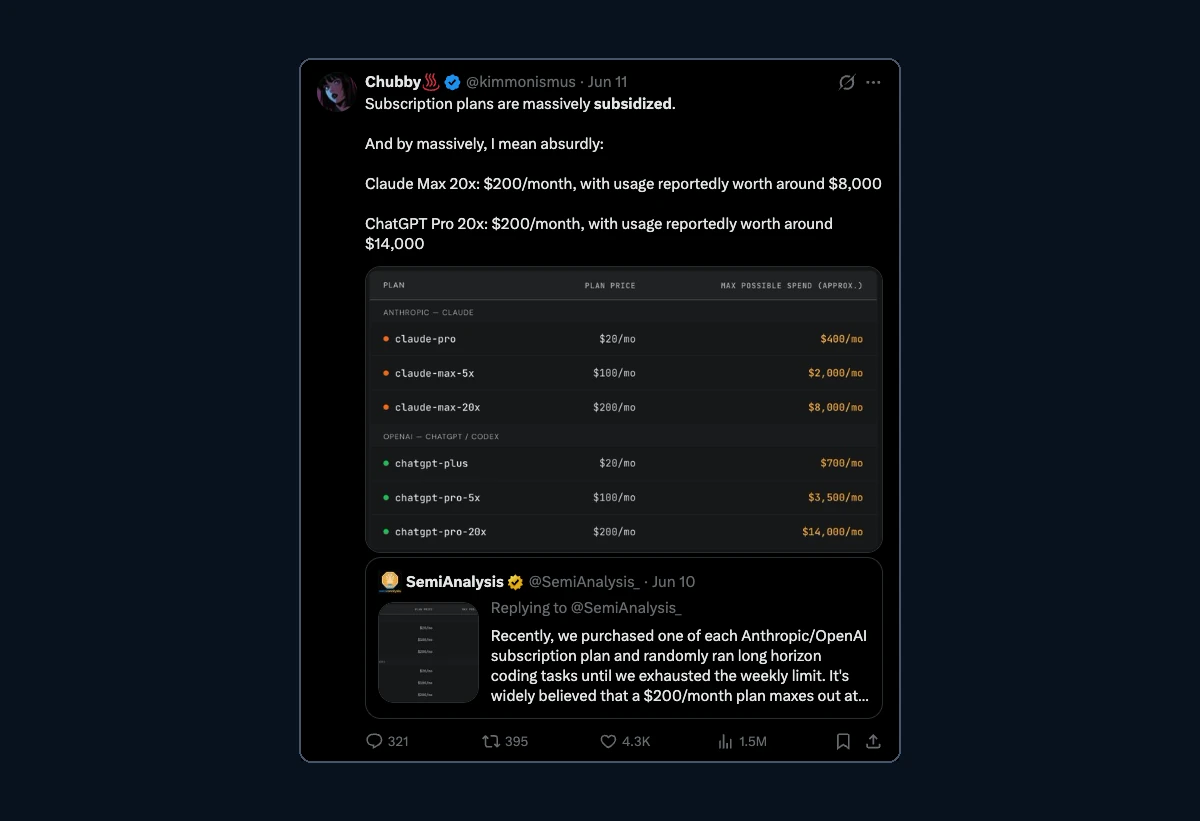
The figures behind the argument are real as an API-equivalent comparison. SemiAnalysis tested Anthropic and OpenAI plans by running long-horizon coding tasks until the weekly limits were exhausted. Its upper-bound estimates put a $200 Claude Max plan at about $8,000 in API-priced usage and a $200 ChatGPT Pro plan at about $14,000. That describes how much the same usage would be billed through an API. It doesn’t establish what the usage cost either company to serve.
Cost per task changes the picture
If you look at cost per completed benchmark task, the numbers are much smaller than the API-equivalent totals suggest. Artificial Analysis introduced the metric in its Intelligence Index v4.1, calculating the average model cost for each task across the index. Its current comparisons put several capable models below $0.50 per task, although the most expensive frontier configurations can run higher.
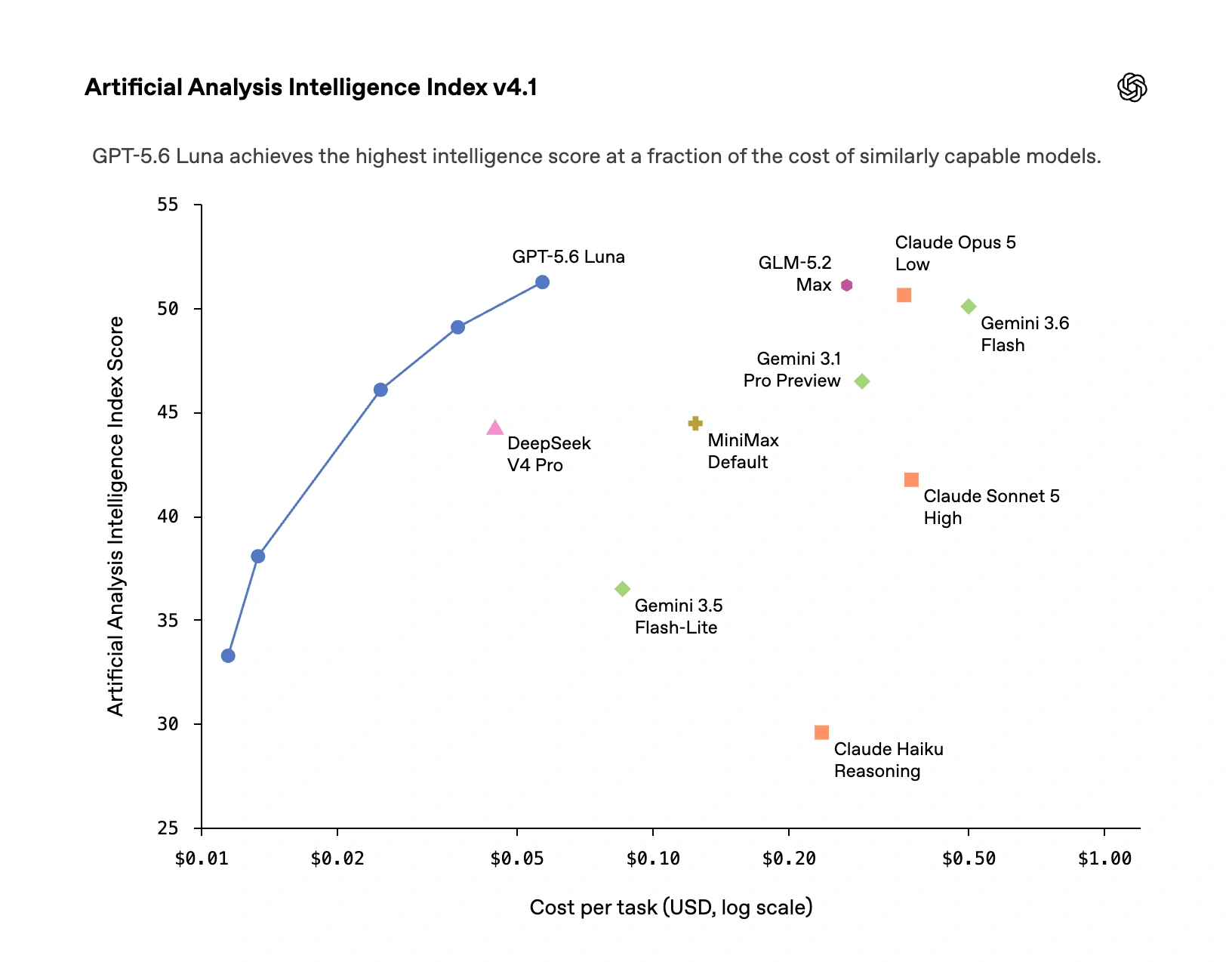
The exact model order will keep changing. The useful part is the unit of analysis: cost per accepted task is closer to what people buy than a scary token total derived from retail API rates.
A gym membership is the better analogy
A better way to look at this is how a premium gym prices its offerings. Imagine you can buy a day pass for $100, no strings attached, or commit to a $350 monthly membership.
Using the AI-subsidization argument, you’d say, “Wow, $350! What a steal. If I went every day for a month at the daily rate, it would cost nearly $3,000.”
What happens is that the gym prices around average subscription usage and earns much more from the flexibility of the day pass. The $100 day rate isn’t a disclosure of what it costs the gym to let one person use the equipment, pool, tennis courts, and shower for a day.
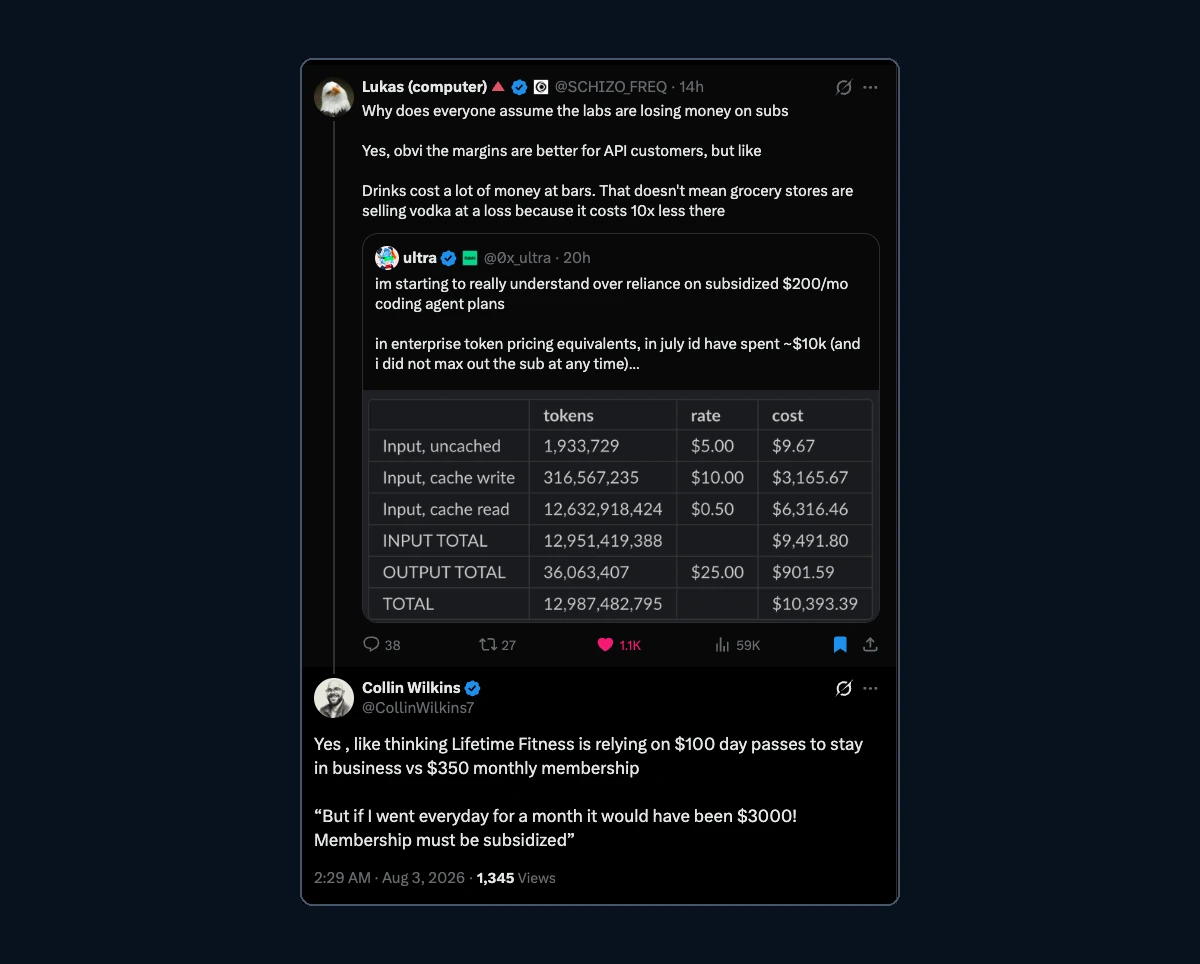
API access and subscriptions are different products. APIs offer metered capacity, programmatic access, service guarantees, and the ability to build a business on top of the models. Subscriptions bundle usage for individuals inside a controlled product, with quotas and limits the provider can adjust. Pricing one from the other is like valuing a gym membership by adding up 30 day passes.
Efficiency gains can show up as lower prices
OpenAI just gave us a useful example. On July 30, it announced an 80% API price cut for GPT-5.6 Luna and a 20% cut for Terra. It also said Sol’s Fast mode could deliver up to 2.5× the speed of standard processing at twice the price. Subscription prices stayed the same, while Luna and Terra began consuming fewer credits.
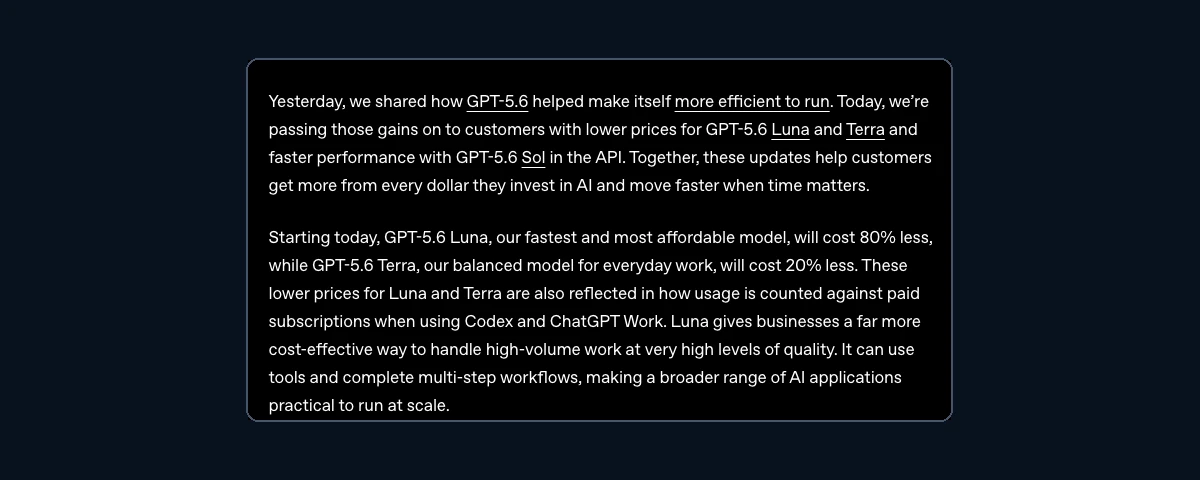
The company attributes those changes to model, inference, routing, production-software, and context-management improvements. OpenAI says Sol helped rewrite production kernels that reduced end-to-end serving cost by 20%, while its experiments improved token-generation efficiency by more than 15%. Those are OpenAI’s reported figures, not an independent audit, but they demonstrate the mechanism: improve the model and the system around it, then complete more work with the same compute.
You can see the same thing yourself on a smaller scale. Run /autoresearch against a measurable performance target and watch a capable model reduce token usage or wall-clock time over repeated rounds. When the intelligence is sufficient and the result is verifiable, loops can find cheap improvements quickly.
I expect AI usage prices to keep coming down as hardware, models, and inference systems improve. That’s a forecast, not proof that every subscription tier is profitable today. I’ve also argued that we may already have practical AGI for many bounded knowledge-work tasks. Now the systems are helping improve parts of their own serving stack.
You want to call AI a bubble? Fine. You think data centers are a losing investment? Okay. You can make those arguments. Just please stop calling AI subscriptions subsidized because the API-equivalent usage number looks large.